
Integrated tooling and engineering that strengthens the path from concept to market
For OEMs who want one engineering-led partner to take critical plastic programs from concept to market, Janler and Uniphase combine precision tooling, molding operations, and automation under one integrated system.
Janler, a premier builder of complex molds, provides front-end R&D engagement, engineering, DFM, and precision tooling execution that helps programs start stronger and carry that intent forward into validated molding, automation, and long-term production support when integration matters most.

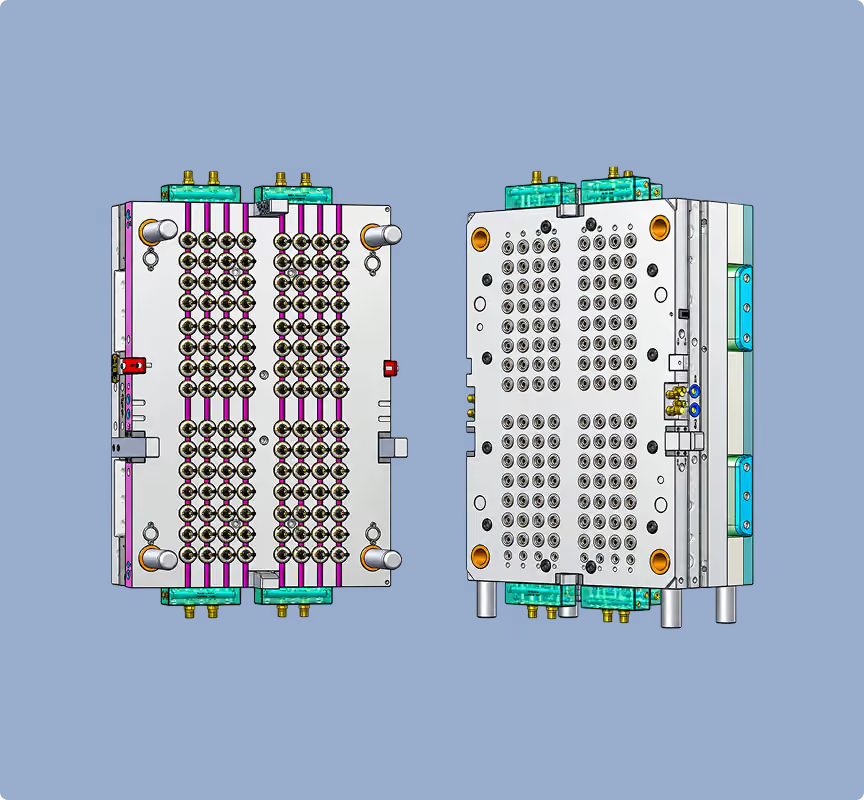
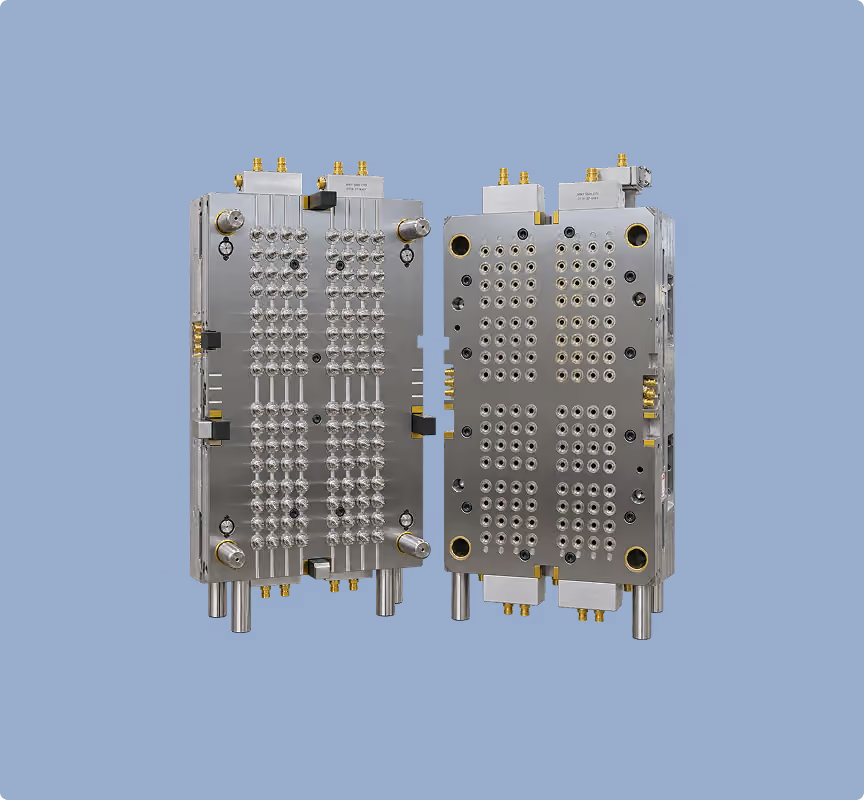
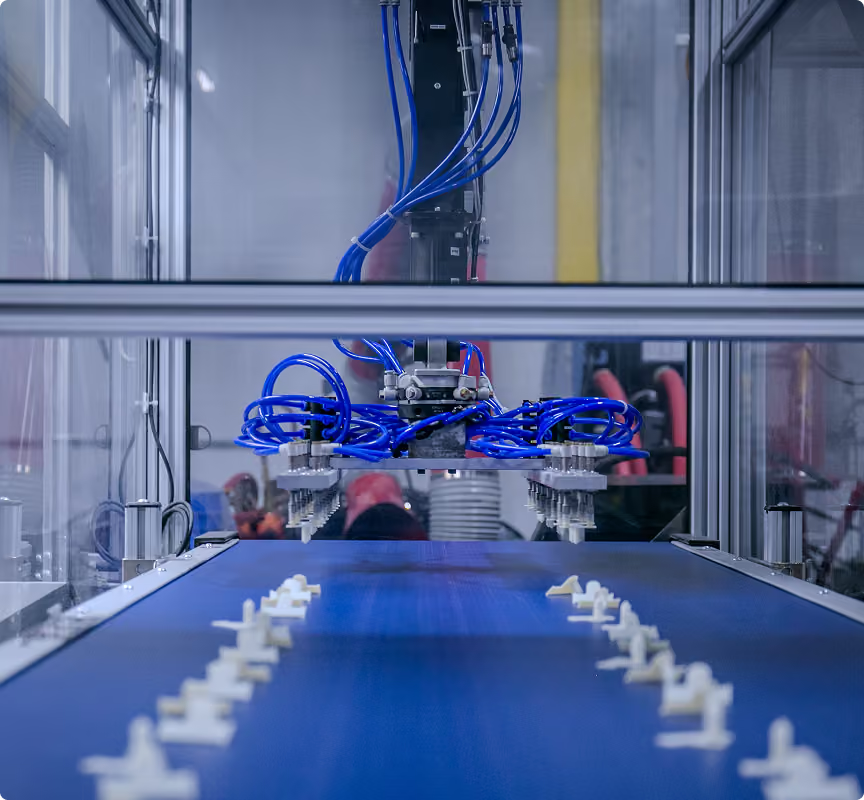
Effective integration starts at the tooling stage.
Many programs run into trouble long before production begins. Weak DFM, under-engineered tooling strategy, or mold decisions made without enough visibility into downstream operations can create quality issues, validation delays, downtime, and lifecycle cost that are difficult to unwind later.
Janler, a Uniphase company, serves as a design, engineering and tooling engine within a complete solutions offering to customers. Typically on the front-end of the integrated solutions path, Janler helps customers make stronger decisions earlier, so tools are designed not only to be built well, but to perform reliably in the real world of molding, automation, and long-term production.

Engineering depth where integration begins
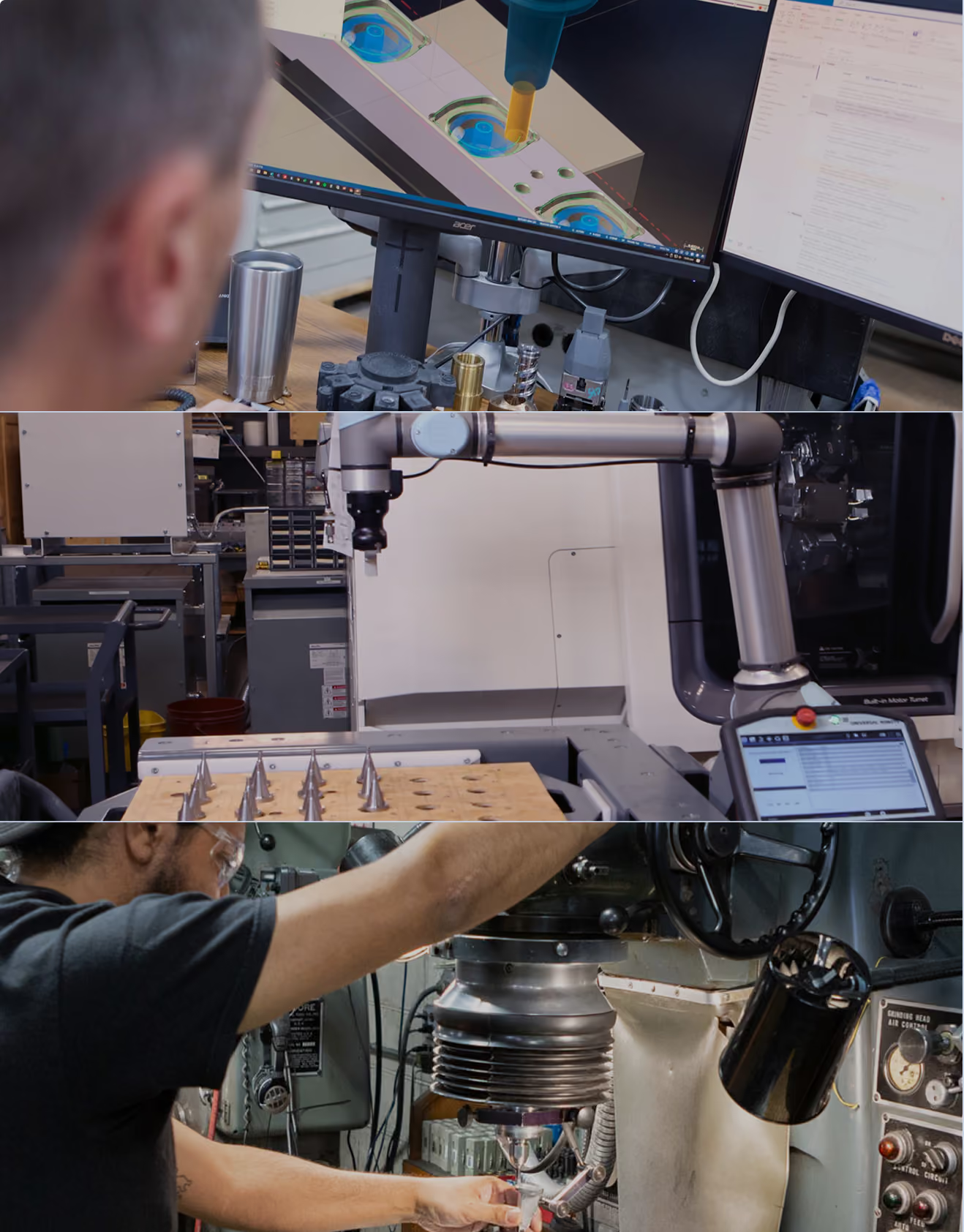
Janler's role in providing integrated solutions is to bring deep engineering and tooling discipline to the front end of the program lifecycle. That includes early R&D engagement, DFM, simulation, part and tooling review, mold strategy, high-precision design and build, and troubleshooting when an existing tool is no longer meeting expectations.
This work matters because tooling is not an isolated deliverable. It is the production asset that shapes repeatability, quality, process stability, automation compatibility, maintenance burden, and long-term output.
Janler establishes the technical foundation that downstream molding and automation depend on. Better front-end tooling decisions create a stronger path into validation, production, and lifecycle performance. Teaming with Uniphase’s advanced production molding capabilities provides customers with reduced execution risk and time to market for both low and high cavitation programs.
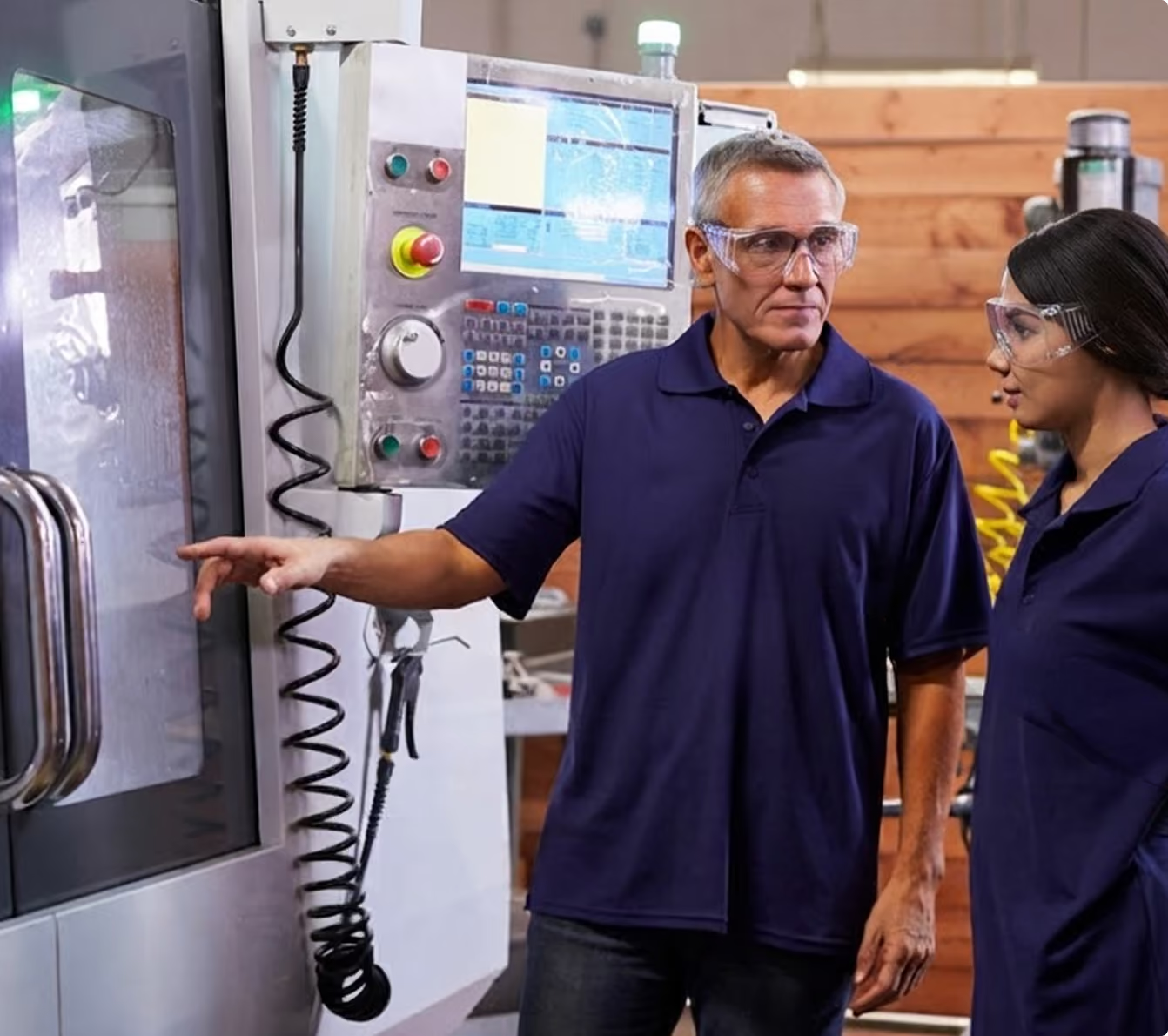
Built for end-to-end program execution
Janler is often where the integrated story becomes tangible for customers. The engineering work done at the front-end influences how a tool runs in the press, how consistently cavities perform, how well automation integrates, and how maintainable the program will be over years of use.
When a program benefits from integration, Janler does not stop at tool delivery. Its engineering intent carries forward into the broader Uniphase system, where molding, process development, automation, and audited production support stay aligned with the original tooling strategy.
The program management team of Janler and Uniphase professionals map out critical stage gates for program execution, providing customers with a clear path to success. This type of continuity is a meaningful market differentiator. Many vendors can build a mold. Fewer can connect tooling decisions to production outcomes through one engineering-led system.
What integration looks like in real programs
New products with difficult manufacturability challenges
For a new product, Janler helps identify manufacturability risks early enough to act on them. Geometry, tolerances, materials, cavitation strategy, mold flow simulation, and tooling decisions can all be evaluated through the lens of how the program will ultimately need to run in production.
Because Janler is part of Uniphase, decisions can be informed by a broad team regarding downstream molding, process development, automation, and operational realities rather than optimized in a vacuum. That gives OEM teams a cleaner path from concept into a production-ready tool and, when needed, into a more stable launch environment.
Underperforming tools and transfer situations
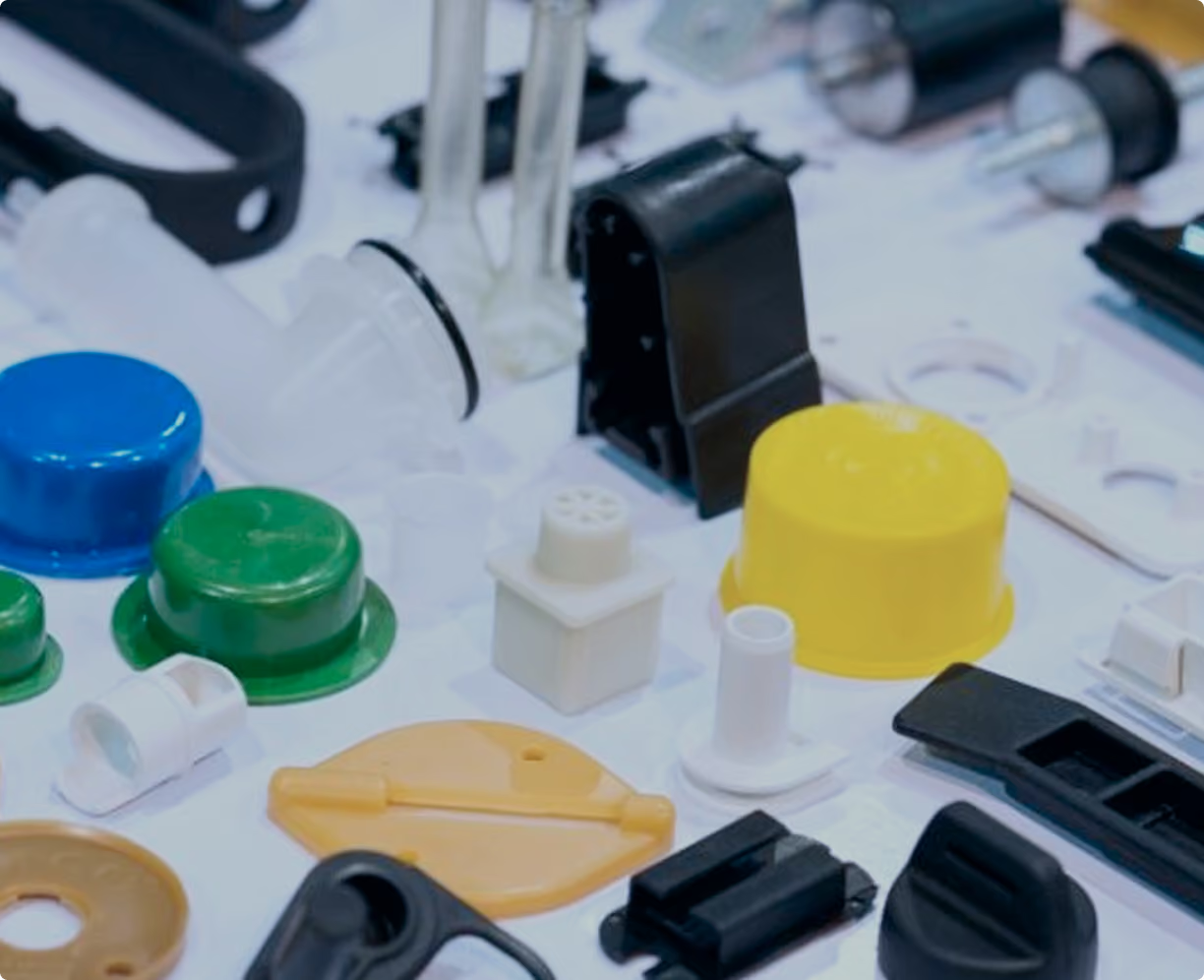
Janler also plays a critical role when an existing tool is creating scrap, downtime, dimensional instability, or weak cavity performance. In those cases, the challenge is not simply to repair steel, but to understand how tooling, processing, and production conditions are interacting.
Inside the integrated Uniphase system, our teams work in lockstep to diagnose the root causes more accurately and implement tooling changes that support better real-world performance.
That reduces the common vendor disconnect where the mold builder, the molder, and the automation partner each see only part of the problem.
Long-life, high-precision programs
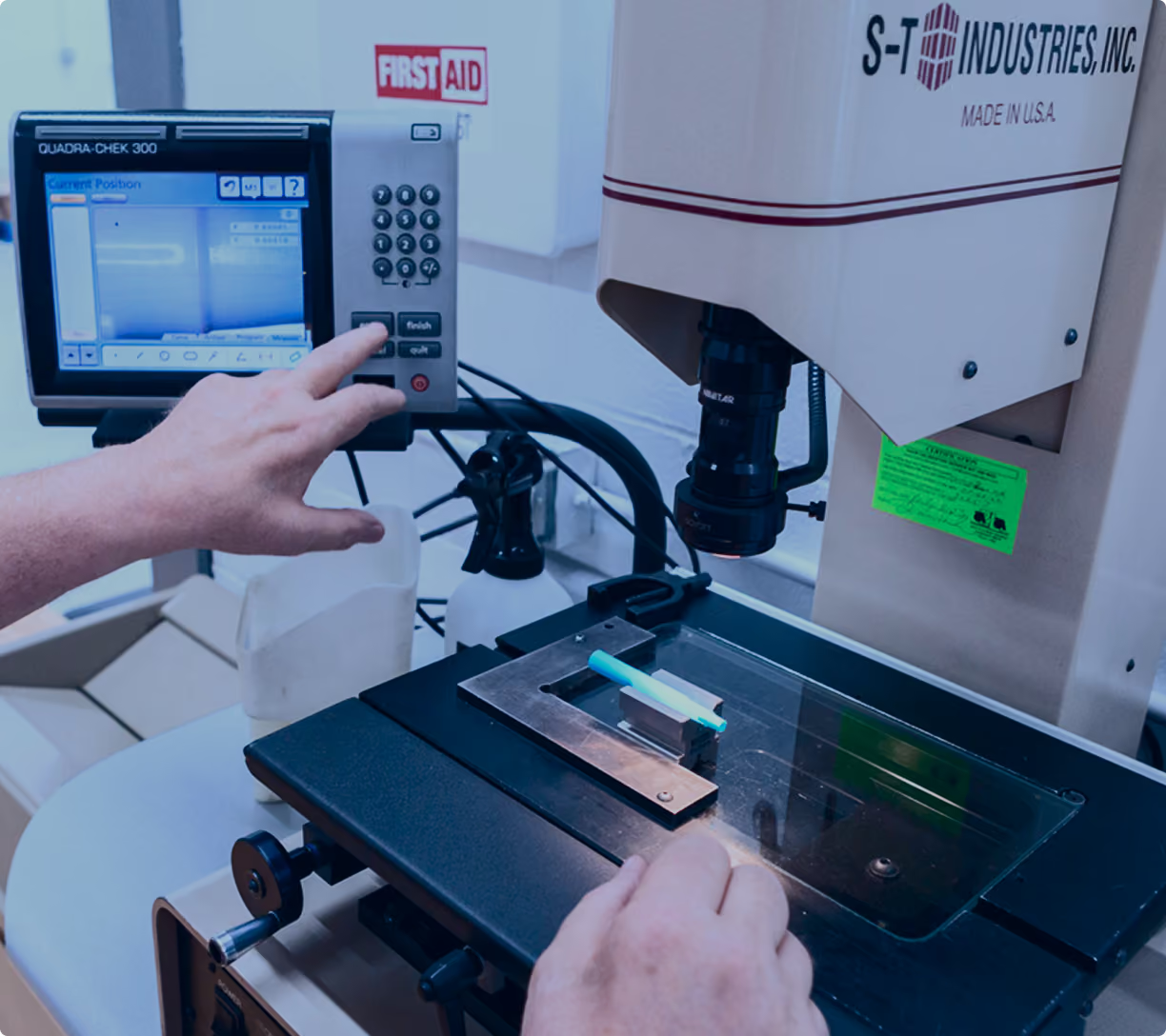
For high-cavitation, tight-tolerance, or long-life tools, Janler's value is not only in precision design and build. It is in designing tooling for longevity, maintainability, interchangeability, and compatibility with the environments the tool will need to support over time.
When paired with Uniphase production and automation support, that tooling strategy becomes part of a broader lifecycle system built to protect uptime, quality, and production economics for years.
How we're different from a typical toolmaker relationship
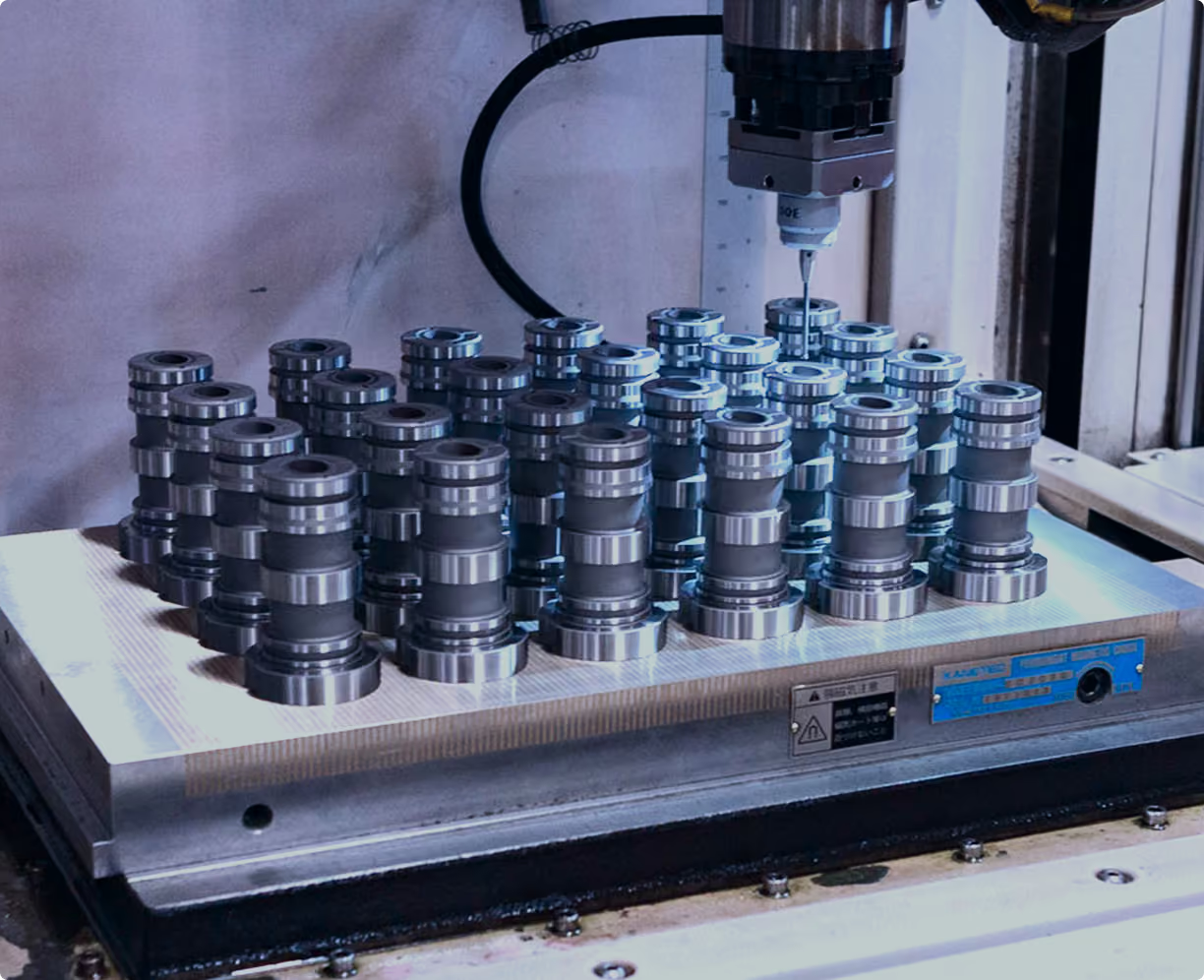
Many toolmakers deliver a mold and step away. Others may offer DFM and engineering input, but without close connection to the production environment where the tool will have to prove itself.
Janler is different because it operates under the Uniphase umbrella as part of an integrated engineering-led system. That means tooling decisions can be made with direct awareness of molding realities, automation requirements, validation pressures, and long-term operational expectations.
For OEMs, that creates a stronger bridge between front-end engineering and downstream execution. The result is not just a better tool on delivery day, but a better chance that the tool will support consistent, efficient, long-term performance in production.
Benefits of integrated tooling and engineering
When Janler is part of an integrated program path, customers gain more than early-stage design support.

Front-end engineering is shaped by downstream production realities, not isolated assumptions.

Precision, interchangeability, and manufacturability are tied to how the mold must actually run.

Tooling strategy supports the process, the cell, and the full production environment more effectively.

Tool corrections can be informed by direct connection to production outcomes.

Maintainability, reliability, and performance over years of use are built into the tooling approach from the beginning.
For critical OEM programs, that kind of integration helps reduce avoidable churn later in the lifecycle and creates a stronger technical foundation for launch, scale, and long-term support.
Where this model fits best
The Janler integrated solutions approach is a strong fit for programs where tooling quality will shape validation success, line performance, automation compatibility, and lifecycle cost from the start.
That includes medical, food and beverage, CPG, and industrial applications with tight tolerances, complex geometries, multi-cavity tooling requirements, transfer risk, or long production-life expectations.
In these programs, integration is a way to connect the earliest engineering decisions to better downstream performance.
Have a program where tooling decisions will shape everything downstream?
Share a few details about the part, the mold, the production environment, or the issue your team is facing, and our team can outline how an integrated engineering path could reduce risk and support stronger long-term results.
Your information is secure and will never be shared. Privacy Policy


Join Our Newsletter to Stay in Touch
Your information is secure and will never be shared. Privacy Policy